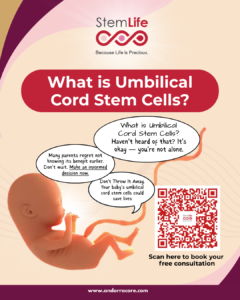
Your Baby’s First Gift: Umbilical Cord Stem Cells
When a baby is born, we celebrate their first cry, their tiny fingers, and their arrival into
the world. But hidden within those precious moments is something many parents don’t
realise — a unique, once-in-a-lifetime biological gift that could support your baby’s
and family’s health in the future: their umbilical cord stem cells.

What Are Umbilical Cord Stem Cells?
Baby’s umbilical cord contains three types of stem cells:
1. Haematopoietic Stem Cells (HSCs) — Found in cord blood, these cells can
regenerate blood and immune system cells. HSCs have been used worldwide in
medical procedures for conditions such as leukaemia, lymphoma,
thalassaemia, and immune deficiencies.
2. Mesenchymal Stem Cells (MSCs) – Found in the umbilical cord tissue, MSCs
are being actively studied for regenerative purposes, such as supporting joint,
bone, and tissue repair. While research is ongoing, MSCs show great promise for
potential medical use in the future
3. Epithelial Stem Cells (EpSCs) – Found in the umbilical cord lining, these cells
are being studied for their potential in supporting the repair of skin and cornea
tissue, and tissue regeneration.
Why Umbilical Cord Stem Cells Are Special
Umbilical cord stem cells can only be collected once, immediately after birth. Once the
cord is discarded; the opportunity is gone forever. With medical research progressing
rapidly, these stem cells may provide valuable health options for your child and family in
the future. Storing them ensures that this precious resource is not wasted as medical
material, but preserved safely for potential use.
Example of Stem Cell Clinical Applications*:
HSC: Autism, Cerebral Palsy, Spinal Cord Injuries
MSC: Autism, Diabetes, Stroke, Osteoarthritis, Sports Injuries
EpSC: Surface Ulcers, Burns, Corneal Injury
* Under clinical trials
How Umbilical Cord Stem Cell Banking Works
1. Enrol During Pregnancy
Parents can register with a cord stem cell bank during pregnancy. You will receive
guidance and counselling to help make an informed decision about storing your baby’s
stem cells. You will also receive a collection kit to bring to the hospital on the day of
delivery.
2. Collection at Birth
After your baby is born, the medical team collects a small sample from the umbilical
cord. The process is safe, quick, and does not affect the baby or the birth experience.
3. Transport & Processing
The collected samples are sent to the laboratory, where they are:
• Checked for quality and health of the cells
• Carefully prepared for cryopreservation
• Safely stored for long-term use
4. Cryopreservation & Storage
The stem cells are frozen and stored below -150 degree Celsius, keeping them viable for
many years and reserved exclusively for your family.
5. Retrieval If Needed
If your child or family ever needs the stored stem cells, the cord stem cell bank can
safely deliver them to the treating hospital.
Preserving Life, Respecting Faith – For Muslim Families
Islamic law generally permits umbilical cord stem cell banking for medical use, viewing
it as a form of permissible charity (Sadaqah) to save lives. It is considered acceptable
provided it is done ethically with parental consent and adheres to Shariah principles
especially regarding consent and avoiding harm. Families who wish to bury the placenta
after birth can still do so while preserving the umbilical cord stem cells safely for
potential medical use.
Learn More About Umbilical Cord Stem Cell Banking
Want to understand how storing your baby’s umbilical cord stem cells could benefit
your family? Scan the QR code below for a free consultation with StemLife. We also
offer affordable and flexible package plans to suit different family needs.
Or visit the official StemLife website